Breast Augmentation
Restores volume and fullness lost after weight loss, pregnancy, or breastfeeding, using implants — for breasts that have deflated but not necessarily sagged.
What it treats
After significant weight loss or finishing breastfeeding, breasts can lose volume — appearing deflated, “empty,” or lacking upper-pole fullness — no matter how much chest strength is built through exercise. Breast tissue is glandular tissue, fat, and skin, not muscle, so strength training cannot restore lost volume. This is a normal biological outcome, not a personal failure. Breast augmentation surgically enhances volume and shape using implants, restoring fullness.
Hospital-based care
Every breast augmentation is performed at Winchester District Memorial Hospital — not a private surgical suite — with an anesthetist and full ability to admit if ever needed.
Implant options
Saline
Silicone shell filled with sterile salt water.
Silicone gel
More natural feel, less visible rippling — the most popular choice.
Submuscular placement
Behind the chest muscle — more natural appearance, especially for thinner patients.
Subglandular / dual-plane
In front of muscle, or a combination approach — generally an easier recovery.
Day of surgery
- Incision placement — most commonly in the breast crease, sometimes around the areola.
- Pocket creation — a breast pocket is created in the chosen plane (submuscular, subglandular, or dual-plane).
- Implant insertion — implants are inserted and positioned precisely.
- Incision closure — closed in layers with dissolvable sutures.
- Support garment — a surgical support bra is applied to support healing.
Recovery timeline
Moderate discomfort (more with submuscular placement). Swelling and bruising normal. Breasts appear high and unnaturally positioned — temporary. Support bra worn continuously.
Discomfort decreases significantly. Return to light activities and desk work. Breasts begin “dropping” into a more natural position.
Most swelling resolved. Implants settling into final position. Gradual return to exercise.
Swelling completely resolved and implants fully settled by 3–6 months; final results fully apparent by 6–12 months.
Recovery timelines vary by individual healing. These ranges are general guidance — your actual timeline will be discussed during consultation.
Scar expectations
An inframammary (breast crease) incision — the most common — leaves a 4–5 cm scar hidden in the natural breast fold. A periareolar incision blends with the areola border but carries a slightly higher risk of sensation changes and breastfeeding impact. Initial scars appear red for 2–3 months, then fade to thin, flat lines over 6–12 months.
Am I a candidate?
Good candidates typically:
- Have lost breast volume after weight loss or pregnancy, with breasts appearing deflated
- Have adequate skin quality to accommodate implants
- Maintain good breast position, or are open to adding a lift if sagging is also present
- Have maintained a stable weight for 6–12 months
- Are a non-smoker, or willing to stop 4–6 weeks before and after surgery
Cost & financing
Typical range: $10,000–$14,000 CAD. Your quote includes the surgeon’s fee, implants, hospital operating room fees, anesthesia, a support garment, and a year of follow-up care. Not covered by OHIP or private insurance; financing options are available.
Results
Every patient’s anatomy, goals, and healing are different — these photos are intended to help you understand what this procedure can achieve, not to predict your own outcome.


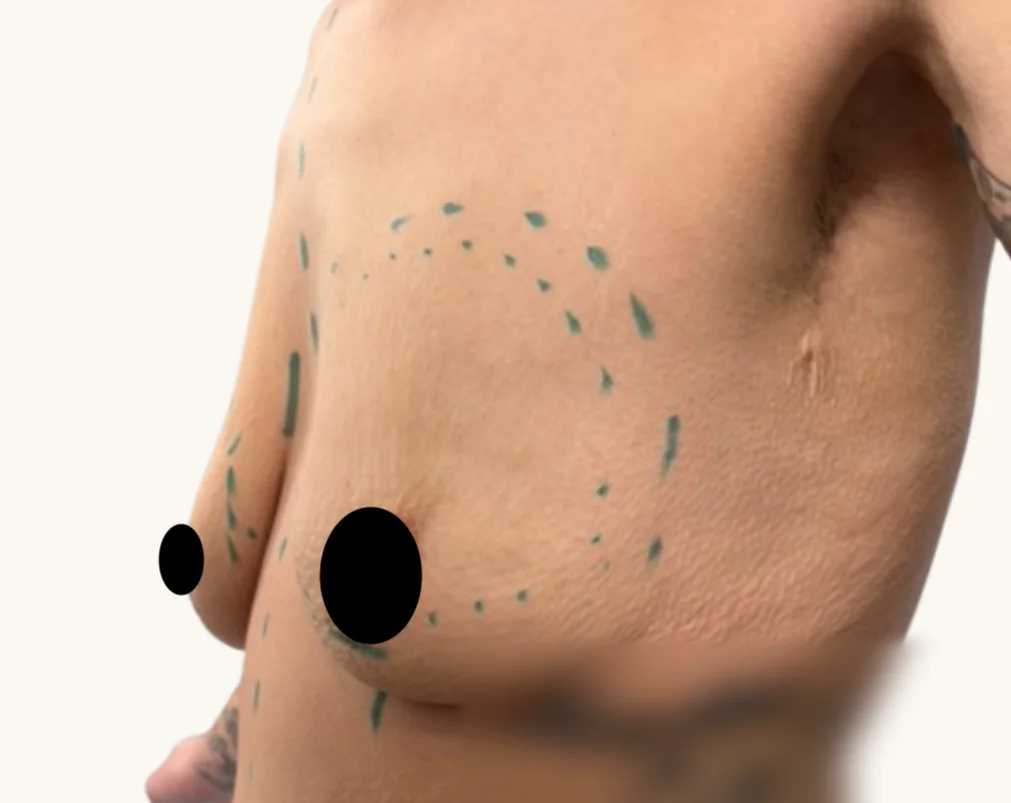
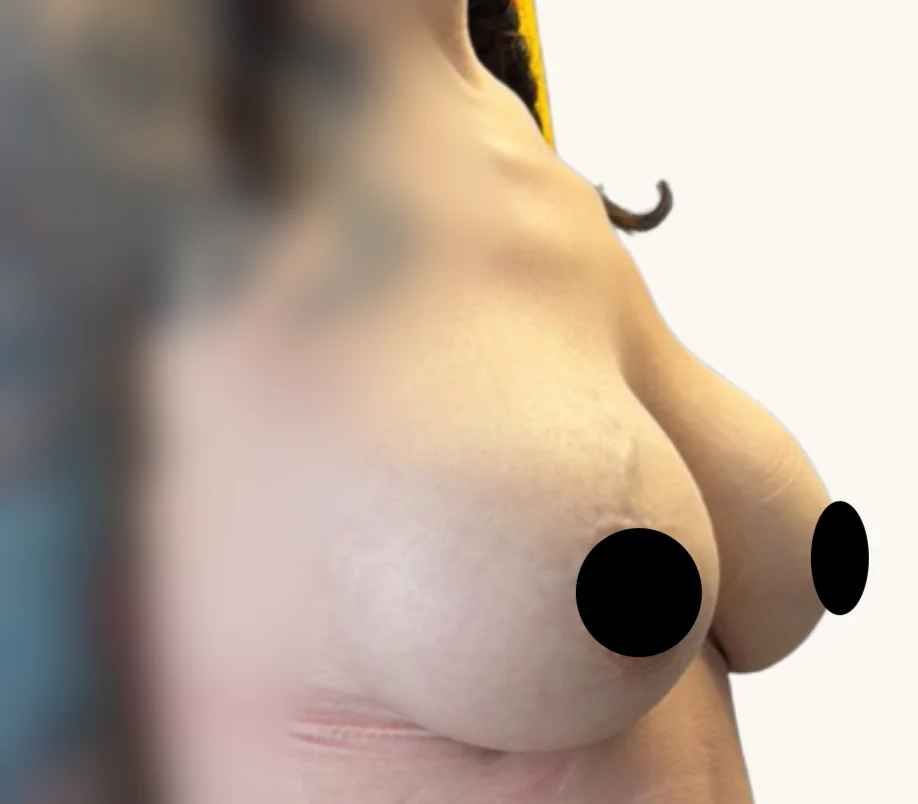
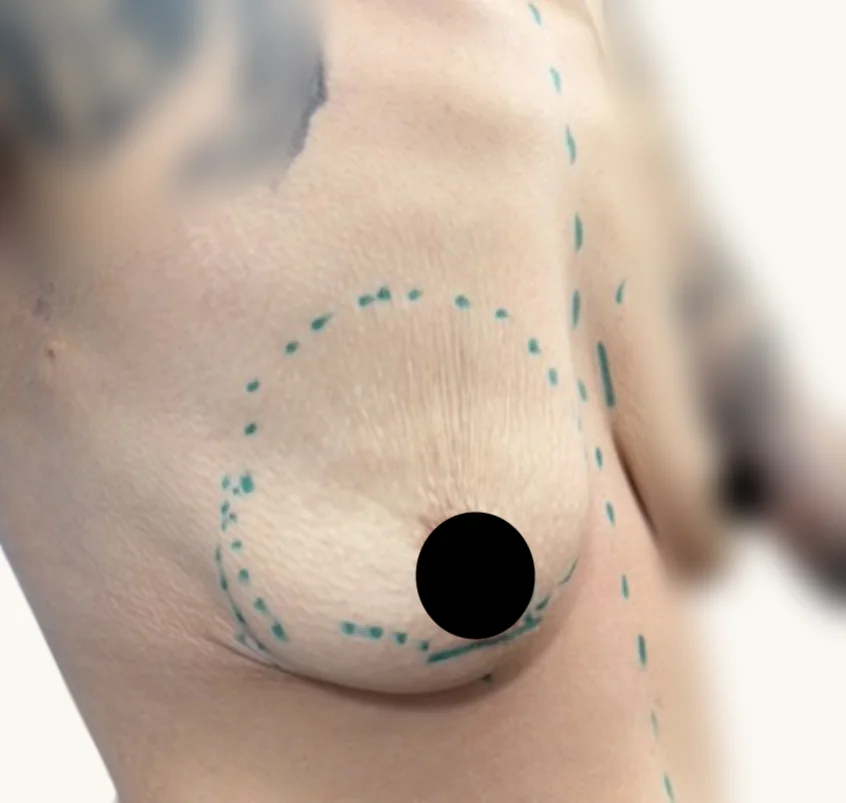
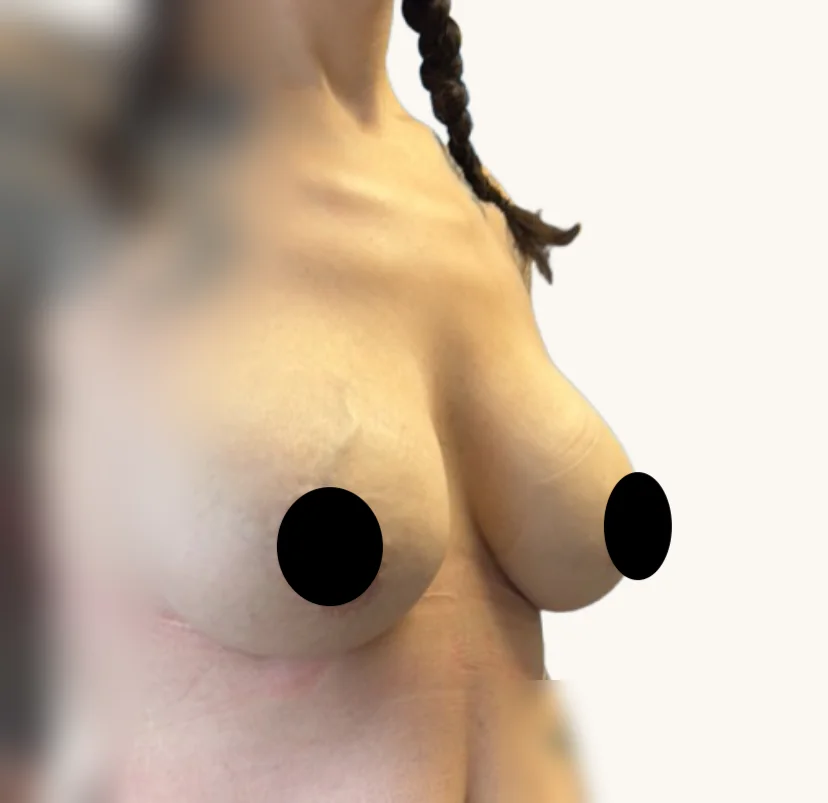
Results are not guaranteed. Individual results may vary.
Risks & safety
As with any surgery, breast augmentation carries real risks worth understanding upfront — implants specifically carry some risks beyond those of surgery alone:
- Bleeding or fluid buildup (seroma/hematoma)
- Infection
- Changes in nipple or skin sensation
- Capsular contracture (scar tissue tightening around the implant)
- Implant malposition or shifting
- Implant rupture or leak, requiring replacement
- Visible rippling of the implant
- A rare risk of BIA-ALCL (a lymphoma associated with certain implant surfaces) — Dr. Borsuk will discuss implant selection in this context
- Impact on future ability to breastfeed
- Asymmetry or unfavorable scarring
- Contour irregularities or deformities
- Need for reoperation or revision surgery
- Dissatisfaction with cosmetic outcome
- Anesthesia-related risks, including rare risk of death
Dr. Borsuk will walk through how these risks apply specifically to your case, and what’s done to minimize them, before you consent to surgery.
Frequently asked questions
Will breast implants feel natural?
Modern silicone gel implants feel very similar to natural breast tissue. Feel also depends on implant placement (submuscular typically feels more natural) and your own tissue coverage — Dr. Borsuk will guide implant type and placement for the most natural result.
Can I breastfeed with implants?
Most women with implants can breastfeed successfully. Risk depends on incision location — inframammary incisions carry lower risk than periareolar incisions.
How long do implants last?
Implants aren’t lifetime devices, but they’re highly durable — most patients enjoy their initial implants for 10–20+ years before eventual replacement due to rupture, capsular contracture, or aesthetic preference.
Can I combine breast augmentation with other procedures?
Yes — some patients combine augmentation with a breast lift (if sagging is also present), a tummy tuck, or other body contouring for a comprehensive transformation.
Is breast augmentation right for you?
The clearest way to know is a private consultation — we’ll discuss implant type, size, and placement based on your anatomy and goals.
Schedule a Consultation