Arm Lift (Brachioplasty)
Removes loose, hanging upper-arm skin — often called “bat wings” — that exercise alone can’t tighten, revealing the toned arms underneath.
What it treats
After significant weight loss — whether through major lifestyle change, GLP-1 medications, or bariatric surgery — loose, hanging skin on the upper arms can remain even after building muscle underneath. No amount of arm exercise will tighten skin that has lost its ability to retract. An arm lift surgically removes this excess skin and any stubborn fat, revealing the muscle definition underneath. It’s not a weight-loss procedure or a substitute for strength training — it addresses skin that diet and exercise physically cannot change.
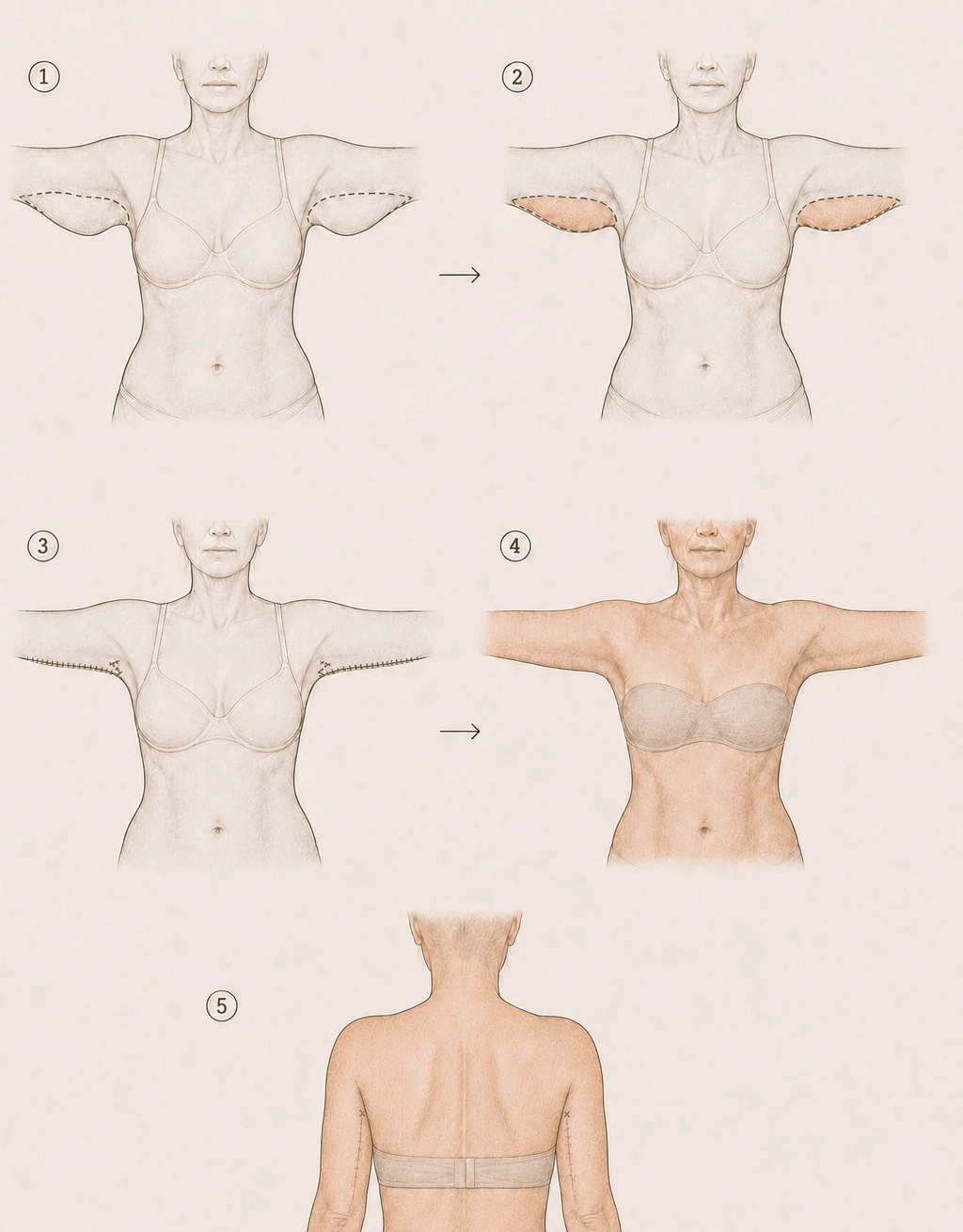
Hospital-based care
Every arm lift is performed at Winchester District Memorial Hospital, with an anesthetist and full emergency capability on-site.
An honest trade-off, upfront
An arm lift requires an incision along the inner or back of the arm, from the armpit toward the elbow — leaving a visible scar, even as it fades over time. Most patients who choose this surgery feel the ability to wear sleeveless clothing and move freely again is well worth that trade-off, but it’s a genuine decision worth discussing honestly, not glossing over.
Day of surgery
- Incision placement — made along the back of the arm, from the armpit extending toward the elbow.
- Skin and tissue removal — excess skin is removed; stubborn fat may be addressed with liposuction at the same time.
- Tissue tightening — remaining skin is redraped and tightened over the underlying tissue.
- Z-plasty at the armpit — where the incision crosses the armpit crease, the straight line is broken into a “Z” shape rather than closed straight across. This redistributes tension across the joint so the scar doesn’t form a tight band as it heals — a straight-line scar crossing the armpit is more prone to contracture, which can restrict arm movement.
- Incision closure — closed in layers with dissolvable sutures; drains may be placed temporarily.
- Compression garment — fitted to minimize swelling and support healing.
Recovery timeline
Moderate discomfort, managed with medication. Swelling and bruising are normal. Arms must stay elevated as much as possible.
Discomfort decreases significantly. Return to light activities and desk work. Compression garment continues.
Most swelling resolved. Gradual return to upper-body and aerobic exercise. Resume normal activities.
Scars begin visibly fading. Full range of motion restored, results becoming apparent.
Final results apparent — scars continue lightening throughout this window.
Walking is encouraged immediately after surgery. Lower-body exercise typically resumes at 2–3 weeks, upper-body at 4–6 weeks, and heavy lifting at 6–8 weeks minimum.
Scar expectations
The main incision runs along the back of the arm, from the armpit to the elbow. It’s visible when arms are raised or extended, especially at first — red and prominent for 2–3 months, then fading to a thin, flat line over 6–12 months. Scars never disappear completely, but most patients find the functional and aesthetic gains far outweigh their presence.
Where the incision crosses the armpit itself, it’s closed as a “Z” shape (a Z-plasty) rather than a straight line — this is a deliberate technique to prevent the scar from tightening into a restrictive band across the joint as it heals. The Z-shaped scar is a little more visually complex than the straight scar down the arm, but it heals with better flexibility and a lower risk of restricting arm movement.
Am I a candidate?
Good candidates typically:
- Have loose, hanging upper-arm skin (“bat wings”) that persists despite exercise
- Have maintained a stable weight for 6–12 months
- Are a non-smoker, or willing to stop 4–6 weeks before and after surgery
- Have realistic expectations about the visible scar this procedure requires
Risks & safety
As with any surgery, an arm lift carries real risks worth understanding upfront rather than glossing over:
- Bleeding
- Infection
- Scarring, including thicker, redder (keloid or hypertrophic) scarring in some patients
- Scar contracture — reduced despite the Z-plasty, but not eliminated entirely
- Lower arm/forearm banding (cording) — a tight, rope-like sensation under the skin during healing
- Neurovascular injury — numbness or altered sensation from nerve involvement
- Lymphedema (swelling from lymphatic disruption) — a smaller risk with this procedure
- Contour irregularities or deformities
- Need for reoperation or revision surgery
- Dissatisfaction with cosmetic outcome
- Blood clots (DVT/PE)
- Anesthesia-related risks, including rare risk of death
Dr. Borsuk will walk through how these risks apply specifically to your case, and what’s done to minimize them, before you consent to surgery.
Cost & financing
Typical range: $16,000–$18,000 CAD. Your quote includes the surgeon’s fee, hospital operating room fees, anesthesia, a compression garment, and a year of follow-up care. Not covered by OHIP or private insurance; financing options are available.
Results
Every patient’s anatomy, goals, and healing are different — these photos are intended to help you understand what this procedure can achieve, not to predict your own outcome.
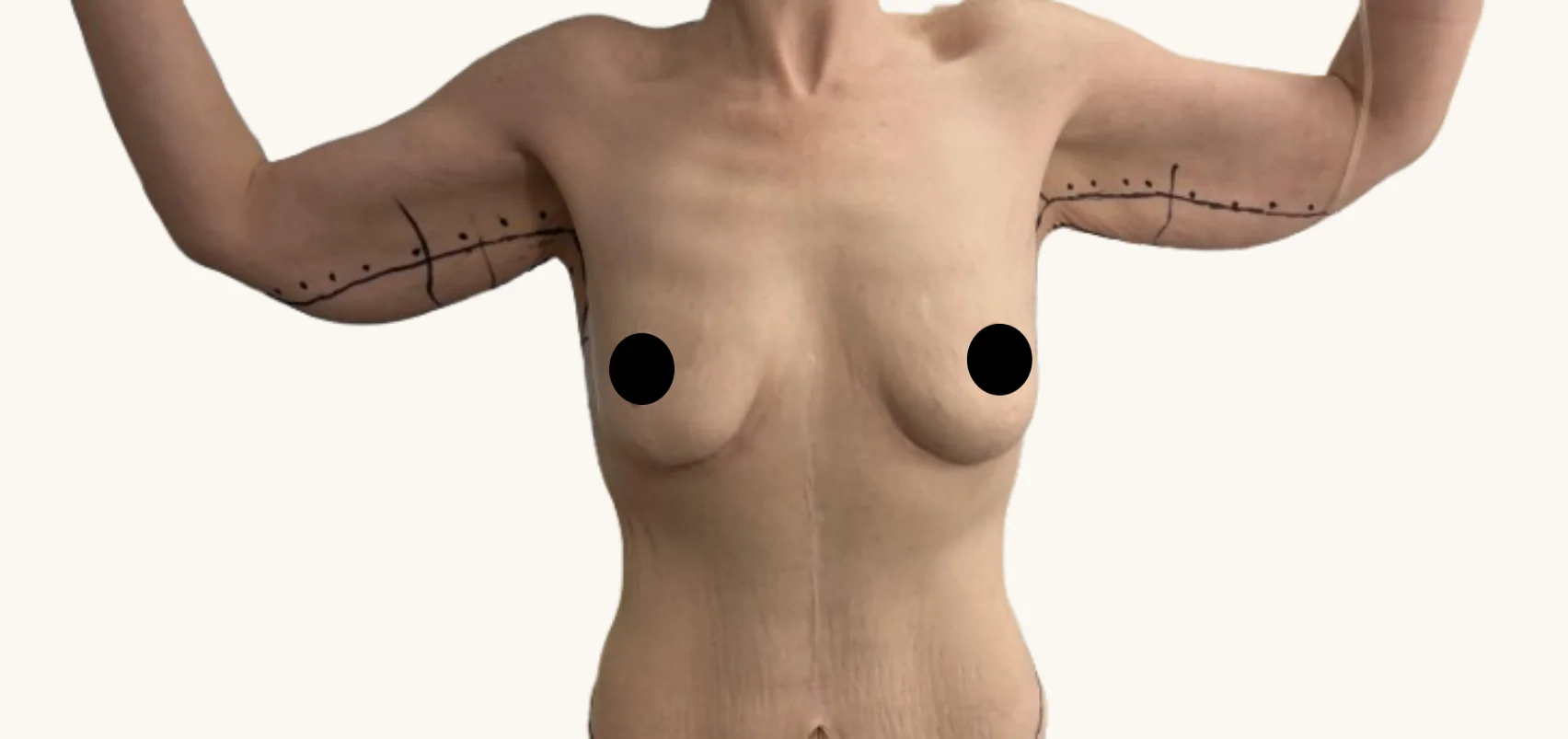
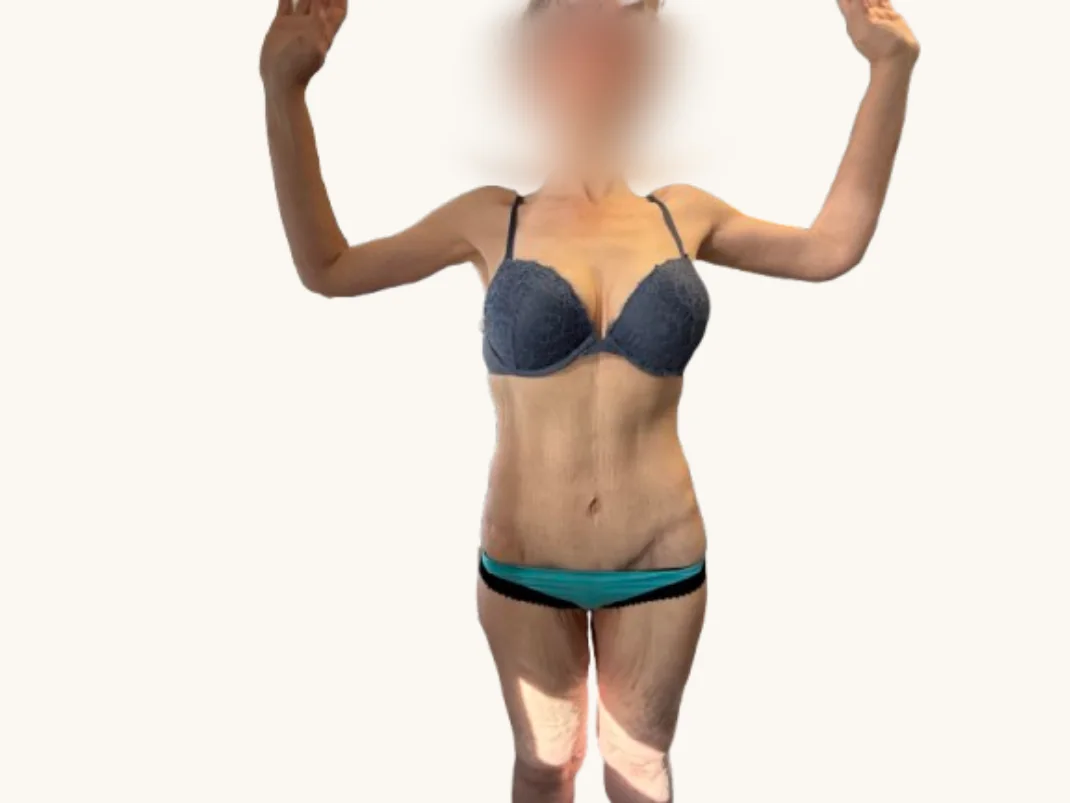
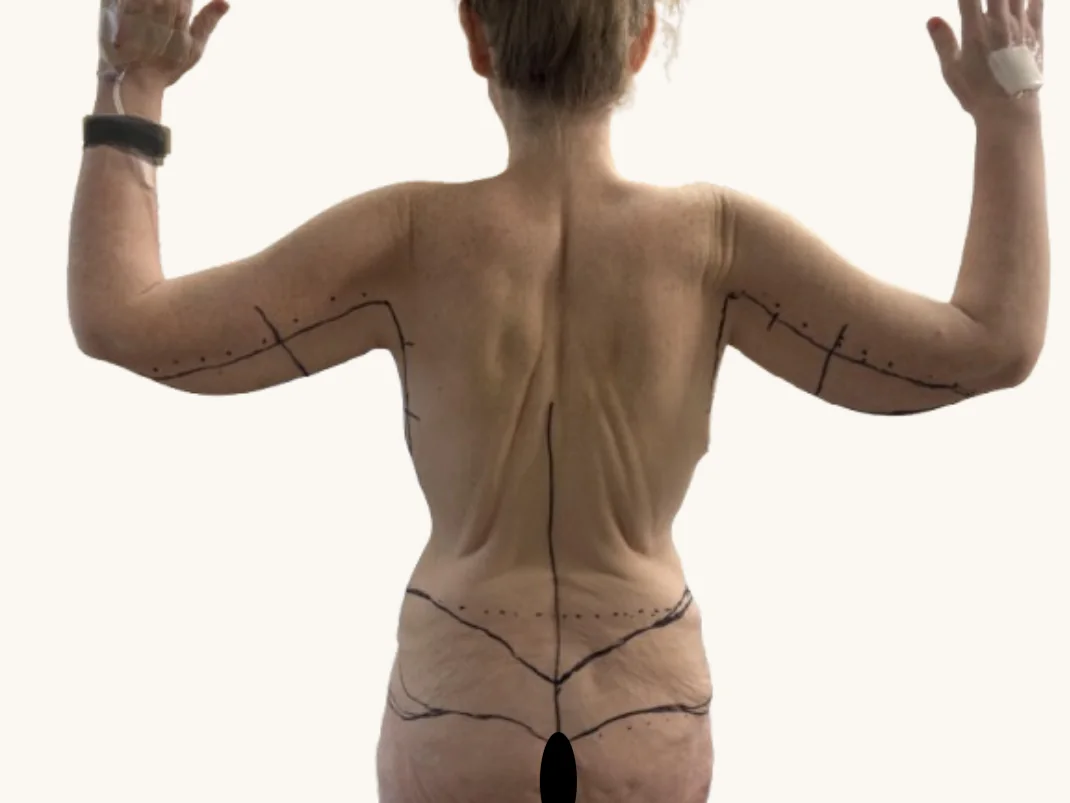
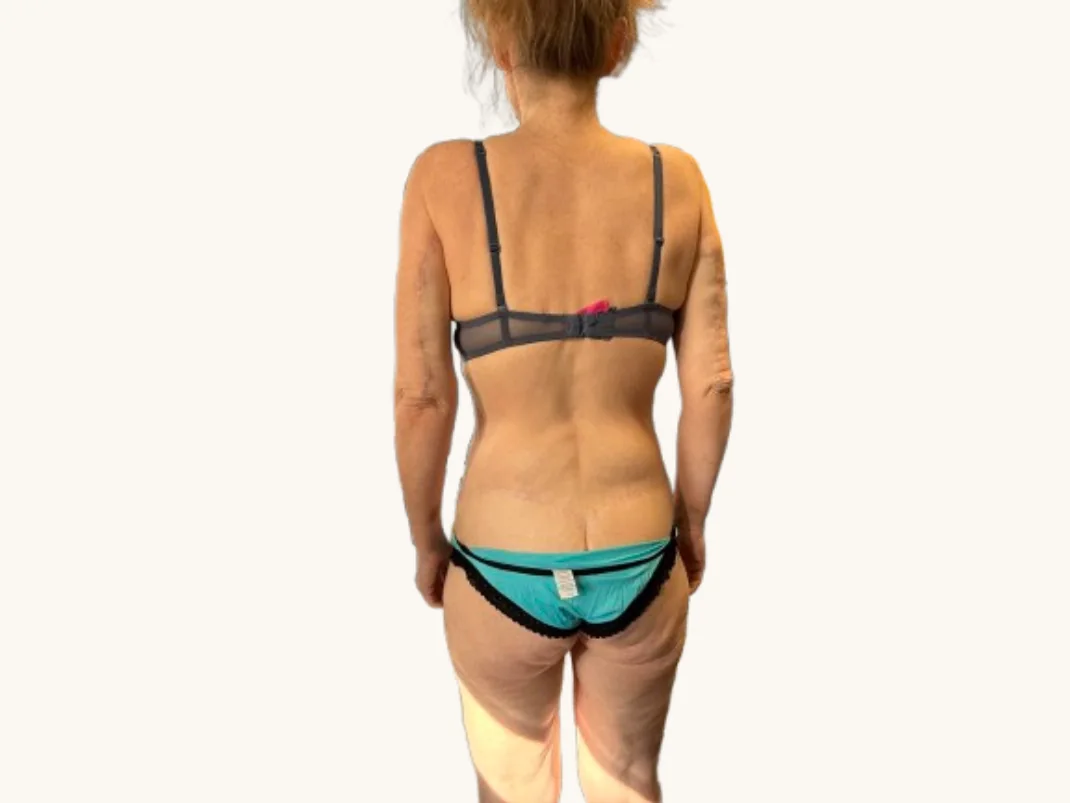
Results are not guaranteed. Individual results may vary.
Frequently asked questions
Are arm lift scars worth it?
Most patients feel the benefits — sleeveless clothing, freedom during activity, confidence — far outweigh the scar. It is, however, visible when arms are raised or extended, and worth being fully comfortable with beforehand.
When can I return to work?
Desk jobs: 1–2 weeks. Physical jobs: 3–4 weeks or longer, depending on the demands of the role.
When can I exercise again?
Walking is encouraged right away. Lower-body exercise at 2–3 weeks, upper-body at 4–6 weeks, and heavy lifting at 6–8 weeks minimum.
Can I have an arm lift if I’m still losing weight?
It’s best to wait until your weight has been stable for 6–12 months. Operating before stabilization can lead to additional loose skin developing afterward and compromised results.
Is an arm lift right for you?
The clearest way to know is a private consultation — we’ll talk through your anatomy and the scar trade-off honestly.
Schedule a Consultation