Body Lift (Belt Lipectomy)
A circumferential procedure addressing excess skin around the entire torso — abdomen, flanks, back, buttocks, and outer thighs — in a single surgery, for patients after massive weight loss.
What it treats
After massive weight loss — 50, 100, 150 pounds or more, through bariatric surgery, lifestyle change, or GLP-1 medications — significant excess skin can remain circumferentially around the entire midsection: abdomen, flanks, back, buttocks, and sometimes outer thighs. This tissue wraps around the whole torso, creating discomfort, hygiene challenges, and hiding the transformation already achieved. A body lift addresses all of it in a single comprehensive surgery, rather than staging multiple separate procedures.
Hospital-based care for major surgery
Given the extent of this surgery, it’s performed at Winchester District Memorial Hospital with a 1–2 night hospital stay for monitored recovery, an anesthetist, and full ability to admit if ever needed — not a private surgical suite.
What a body lift combines
- Full tummy tuck (front)
- Back lift (back)
- Flank contouring (sides)
- Buttock lift (back/bottom)
- Outer thigh lift (lateral thighs)
What it’s not: a weight-loss procedure, a quick fix, or appropriate for moderate weight loss — it’s designed specifically for massive weight loss (typically 50+ pounds) with excess skin circling the entire torso.
Day of surgery
- Circumferential incision — made around the entire torso at the natural belt line, extending hip to hip across front and back.
- Abdominal work — excess abdominal skin removed, muscles tightened, belly button repositioned.
- Flank contouring — excess skin removed from the sides; liposuction may refine the waistline.
- Back and buttock lifting — back rolls removed, buttocks lifted and shaped, outer thighs tightened.
- Comprehensive tightening — all tissue pulled circumferentially for a 360-degree contour.
- Incision closure — closed in multiple layers; typically 4–6 surgical drains placed to manage fluid.
- Compression garment — a comprehensive garment applied for support and swelling control.
Recovery timeline
Overnight hospital stay with close monitoring, IV pain management, and multiple drains in place.
Significant discomfort, extensive swelling and bruising. Very limited mobility — bed rest essential, full-time care assistance required.
Pain decreasing. Drains gradually removed, typically by weeks 2–3. Activity still very limited, primarily resting.
Return to desk work possible. Light walking increased. All drains removed.
Significant improvement in energy and mobility. Light exercise approved around week 8–10.
Full release to exercise by month 3–4. Final body contour visible by 6–12 months; scars continue fading through 18–24 months.
Recovery timelines vary by individual healing. These ranges are general guidance — your actual timeline will be discussed in detail during consultation.
Scar expectations
The circumferential scar extends around the entire torso at the belt line — a significant, permanent scar positioned to be hidden beneath most underwear and swimwear. Initial scars are red and prominent for 3–6 months, gradually fading to white or light pink lines over 12–24 months. This is a genuine, permanent trade-off worth being fully comfortable with before proceeding.
Am I a candidate?
Good candidates typically:
- Have achieved massive weight loss, typically 50+ pounds
- Have excess skin circumferentially around the entire midsection
- Have maintained a stable weight for at least 6 months
- Are in good overall health, able to tolerate longer surgery, with adequate nutrition
- Have a strong support system and can commit 4–6 weeks off work
Full-time caregiver assistance is required for at least the first week of recovery — this is not optional.
What a body lift doesn’t address
A body lift addresses the torso circumferentially — it does not address inner thighs (may need a separate thigh lift), upper arms (may need a separate arm lift), or breasts (may need separate breast surgery). Many patients pursue these as additional procedures 6–12 months later.
Cost & financing
Typical range: $20,000–$30,000+ CAD — higher than individual procedures due to the extensive surgical time (5–7 hours) and comprehensive nature of the work. Your quote includes the surgeon’s fee, hospital operating room fees (including the overnight stay), anesthesia, a compression garment, and a year of follow-up care. Not covered by OHIP or private insurance; financing options are available.
Results
Every patient’s anatomy, goals, and healing are different — these photos are intended to help you understand what this procedure can achieve, not to predict your own outcome.
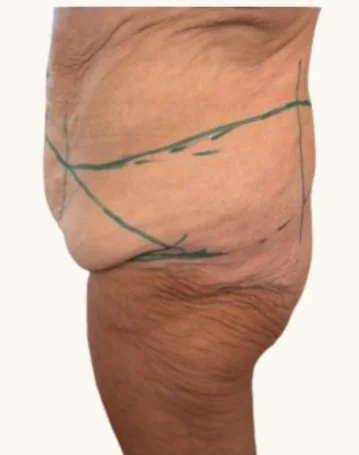
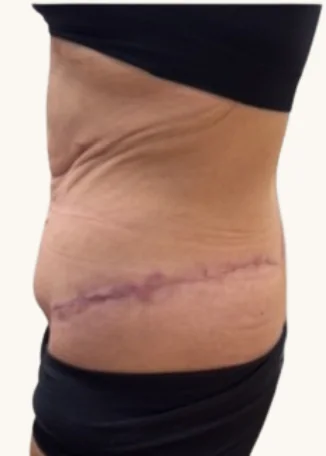
Results are not guaranteed. Individual results may vary.
Body lift vs. individual procedures
A body lift addresses the abdomen, flanks, back, buttocks, and outer thighs all in one surgery, with one recovery period and a lower total cost than separate procedures — though it requires a longer single recovery (4–6 weeks off work). Staging individual procedures (a tummy tuck first, a back lift later) means less extensive surgery each time and shorter individual recoveries, but multiple recoveries overall and a higher total cost. Dr. Borsuk will help determine which approach fits your health status and goals.
Risks & safety
As with any surgery, a body lift carries real risks worth understanding upfront — and because this is major, extensive surgery, some risks are more significant than with a single smaller procedure:
- Bleeding or fluid buildup (seroma)
- Infection
- Delayed wound healing or wound separation
- Changes in skin sensation
- Blood clots (DVT/PE) — a more significant risk given the extended surgery time
- Asymmetry or unfavorable scarring
- Contour irregularities or deformities
- Need for reoperation or revision surgery
- Dissatisfaction with cosmetic outcome
- Anesthesia-related risks, including rare risk of death
Dr. Borsuk will walk through how these risks apply specifically to your case, and what’s done to minimize them, before you consent to surgery.
Frequently asked questions
How do I know if I need a body lift vs. individual procedures?
A body lift is typically appropriate for massive weight loss with excess skin circumferentially around the entire torso, good overall health able to tolerate longer surgery, and the ability to dedicate 4–6 weeks to recovery. Dr. Borsuk evaluates your specific anatomy during consultation.
Will I need help during recovery?
Yes — full-time assistance is required for at least the first week, with continued help for 2–3 weeks. You won’t be able to manage drains or daily activities alone initially. Arrange a dedicated caregiver before surgery.
Will a body lift remove all my excess skin?
It addresses the torso — abdomen, flanks, back, buttocks, outer thighs. It does not address inner thighs, upper arms, or breasts, which may need separate procedures.
When after bariatric surgery can I have a body lift?
Most surgeons recommend waiting at least 6 months, and often 6–12 months, to allow for maximum weight loss, weight stabilization, and nutritional optimization. Dr. Borsuk coordinates timing with your bariatric surgeon.
Is a body lift right for you?
The clearest way to know is a private consultation — we’ll assess your anatomy and whether a comprehensive or staged approach fits your goals.
Schedule a Consultation