Tummy Tuck (Abdominoplasty)
Removes excess skin and fat from the abdomen and tightens weakened or separated muscles — for a flatter, firmer contour and stronger core.
What it treats
A tummy tuck addresses loose abdominal skin and weakened or separated abdominal muscles (diastasis recti) — commonly the result of pregnancy, significant weight loss, GLP-1 medication use, or simply the natural effects of aging. It removes excess skin and fat between the navel and the pubic area, and repairs the underlying muscle layer for a firmer, flatter core. Excess skin is a natural biological outcome of significant body change — not a sign of insufficient effort, and once skin has stretched beyond its ability to retract on its own, surgery is the only way to remove it.
Hospital-based care
Every tummy tuck is performed at Winchester District Memorial Hospital — not a private surgical suite — with an anesthetist, hospital-grade safety protocols, and full emergency capability on-site if ever needed.
The first step
Everything starts with an in-person consultation. Dr. Borsuk will review your medical history, examine your abdomen for skin laxity, muscle separation, and any hernias, and talk through your goals — including whether a full tummy tuck is actually the right fit, or whether a mini tummy tuck, panniculectomy, or fleur-de-lys approach would serve you better. You’ll leave with a clear surgical plan, an honest breakdown of what to expect, and time to ask every question you have before deciding anything.
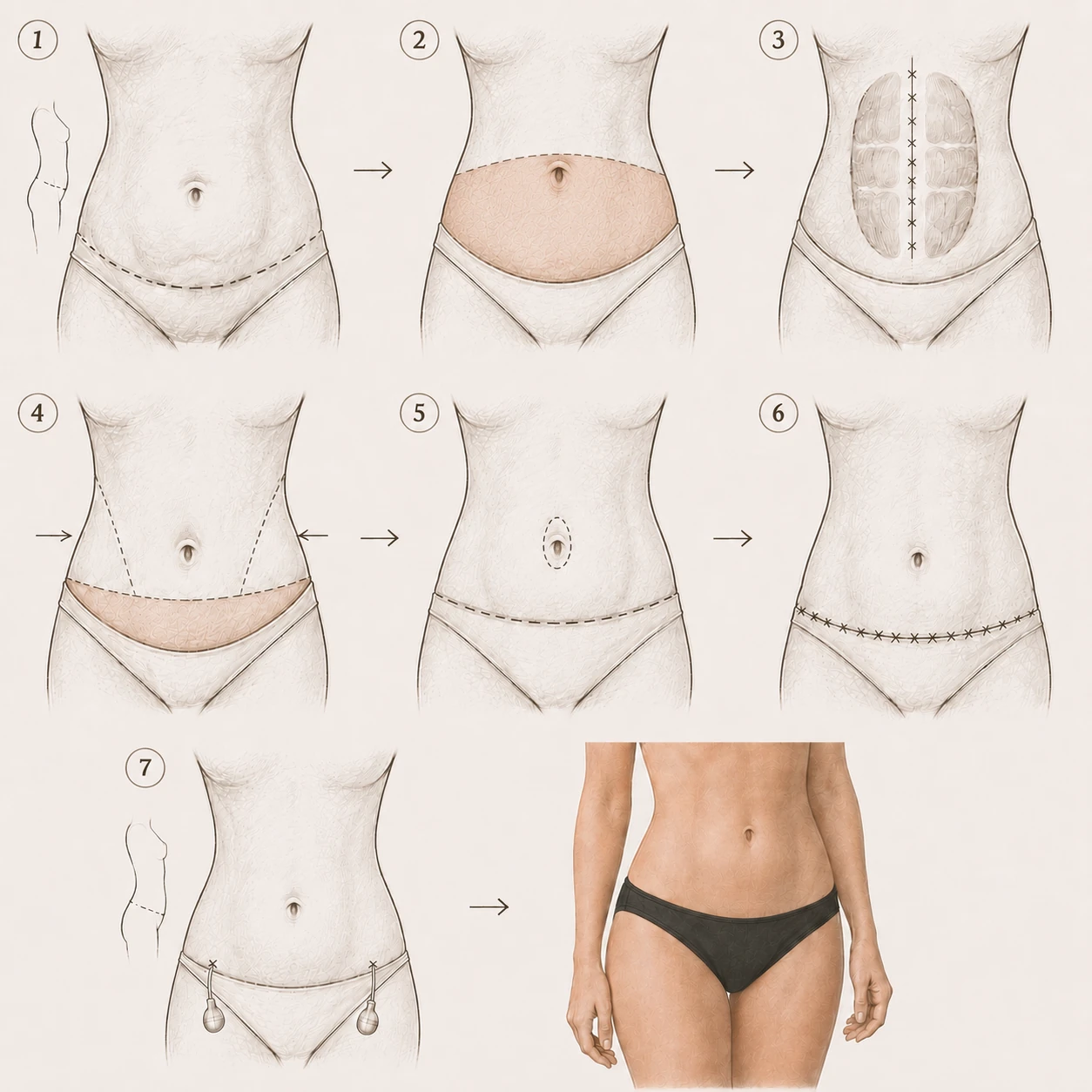
Day of surgery — step by step
- Incision placement — a horizontal incision is made low across the abdomen, just above the pubic area, sized to the amount of excess skin. A second small incision is made around the navel.
- Skin and tissue separation — the skin is lifted from the abdominal wall up toward the ribcage, exposing the underlying muscle layer.
- Muscle repair — separated abdominal muscles (diastasis recti) are stitched back together and tightened.
- Excess skin removal — loose skin is pulled down and trimmed away; the remaining skin is redraped smoothly over the new contour.
- Belly button repositioning — the navel is brought through a new opening positioned naturally on your new abdominal contour.
- Incision closure — closed in layers with dissolvable sutures; a drain is typically placed temporarily to prevent fluid buildup.
- Compression garment — fitted before you wake up, to support healing and reduce swelling.
Recovery timeline
Moderate to significant discomfort, managed with prescription pain medication. Swelling and bruising are normal. You’ll stand slightly bent forward to protect the incision. Drains remain in place. Activity is very limited.
Pain decreases and shifts to over-the-counter medication. Drains are typically removed around week 2. Standing upright becomes more comfortable. Most patients return to desk work around the 2-week mark.
Swelling continues improving. Light activity — walking, gentle stretching — resumes. No core exercise or heavy lifting yet.
Full exercise typically resumes. Scars begin visibly fading, and the abdominal contour continues to define itself.
Final results emerge as scars mature and fully settle — most patients enjoy their results for decades with stable weight.
Recovery timelines vary by individual healing, the extent of the procedure, and whether it’s combined with other surgeries. These ranges are general guidance — your actual timeline will be discussed in detail during your consultation.
Scar expectations
The incision sits low, positioned to be hidden beneath underwear or most swimwear. Scars typically appear red and slightly raised for the first 2–3 months, then gradually fade to thin, flat lines over 6–12 months. Final scar appearance varies by genetics and skin type — most patients find the functional and aesthetic benefits far outweigh the scarring.
There is also a second, smaller scar around the belly button itself, from repositioning it onto the new abdominal contour — this one is typically fairly inconspicuous, settling into the natural contours of the navel as it heals.
Benefits patients describe
- A flatter, firmer abdominal contour that diet and exercise alone couldn’t achieve
- Relief from skin irritation, chafing, or hygiene issues caused by overhanging skin
- A stronger, more supported core after muscle repair
- Clothing that fits properly without accommodating excess tissue
- For post-weight-loss patients: a body that finally reflects the change already made
Am I a candidate?
Good candidates for a tummy tuck typically:
- Have maintained a stable weight for 6–12 months, whatever the path there (lifestyle change, GLP-1 medication, bariatric surgery, or pregnancy)
- Are at or near their goal weight, in good overall health
- Are a non-smoker, or willing to stop 4–6 weeks before and after surgery
- Are not planning future pregnancy or significant additional weight loss
A tummy tuck is not a weight-loss procedure, and isn’t a substitute for a healthy lifestyle — it addresses skin and muscle that diet and exercise alone cannot change.
Risks & safety
As with any surgery, a tummy tuck carries real risks worth understanding upfront rather than glossing over:
- Bleeding or fluid buildup (seroma)
- Infection
- Changes in skin sensation
- Delayed wound healing
- Blood clots
- Asymmetry or unfavorable scarring
- Contour irregularities or deformities
- Need for reoperation or revision surgery
- Dissatisfaction with cosmetic outcome
- Anesthesia-related risks
Dr. Borsuk will walk through how these risks apply specifically to your case, and what’s done to minimize them, before you consent to surgery.
Cost & financing
Typical range: $12,000–$18,000 CAD, depending on the extent of excess skin, complexity of muscle repair, and whether it’s combined with other procedures. A surgical quote includes the surgeon’s fee, hospital operating room fees, anesthesia, a post-operative compression garment, and a year of follow-up appointments. A standard tummy tuck is cosmetic and not covered by OHIP or private insurance — if a panniculectomy is medically indicated instead, partial coverage may be available. Monthly payment/financing options are available; ask during your consultation.
Pricing is a general guide, not a quote — your exact cost is determined after your consultation.
Results
Every patient’s anatomy, goals, and healing are different — these photos are intended to help you understand what this procedure can achieve, not to predict your own outcome.
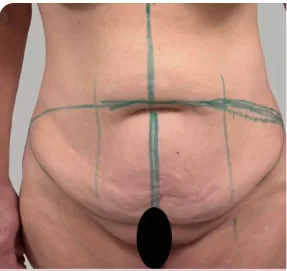
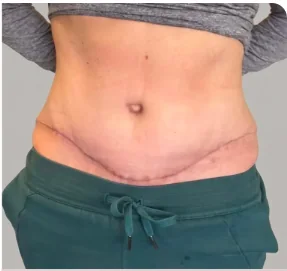
Results are not guaranteed. Individual results may vary.
How this compares to other options
Vs. Mini Tummy Tuck: a full tummy tuck addresses the entire abdomen with muscle repair and belly-button repositioning; a mini tummy tuck treats only the lower abdomen, with limited or no muscle work and a shorter recovery.
Vs. Liposuction: a tummy tuck removes excess skin and fat and repairs muscle — the right choice for loose, hanging tissue. Liposuction removes fat only and does not tighten skin; if you have significant excess skin, liposuction alone can make its appearance worse. Many patients benefit from combining both.
Vs. Panniculectomy: a tummy tuck is cosmetic and creates an aesthetic contour; a panniculectomy is a medical procedure that removes the overhanging abdominal “apron” for functional relief and may qualify for partial insurance coverage, without the same contouring result.
See the Full Comparison Guide →Combining with other procedures
A tummy tuck is often combined with liposuction to contour the flanks, waist, and back in one recovery period. Combined with breast surgery, it’s often called a mommy makeover — addressing post-pregnancy changes together. For patients after massive weight loss, it can also be combined with flank, back, and buttock contouring as part of a full body lift.
Frequently asked questions
How long do results last?
Results are long-lasting with stable weight — removed skin does not return. Significant weight gain (30+ lbs) can stretch remaining skin, and pregnancy can re-stretch the repaired muscles. Most patients enjoy their results for decades with weight maintenance.
How painful is recovery?
Most patients describe moderate to significant discomfort in week 1, managed with prescription medication, decreasing to mild soreness by weeks 2–3 (over-the-counter medication), with minimal pain by week 4.
How soon after bariatric surgery can I have a tummy tuck?
Most surgeons recommend waiting 6–12 months after bariatric surgery to allow for maximum weight loss and stabilization. Your weight should generally be stable for at least 6 months before body contouring — Dr. Borsuk can coordinate timing with your bariatric surgeon.
Can I have a tummy tuck if I want more children?
It’s generally recommended to wait until you’ve completed your family, since pregnancy can re-stretch the repaired abdominal skin and muscles. Some patients proceed anyway, understanding they may need revision surgery later — this is worth discussing directly during consultation.
Will insurance cover any part of this?
A standard tummy tuck is cosmetic and not covered by OHIP or private insurance. If a panniculectomy is medically necessary (documented health issues from overhanging skin), partial coverage may be available.
What will the scar look like?
The incision sits low, typically hidden under underwear or swimwear. It appears red and raised for the first 2–3 months, then fades to a thin, flat line over 6–12 months.
Is a tummy tuck right for you?
The clearest way to know is a private consultation — we’ll look at your anatomy together and talk through the honest trade-offs.
Schedule a Consultation